All Categories
Featured

Navigating GCC Stock Exchange Trends for 2026
Table of Contents
All GCC countries face the difficulty of ensuring future employment for nationals while keeping dependence on foreign workers to fill specific roles, the seriousness of this concern varies across nationwide contexts because GCC countries' demographics and top priority areas diverge considerably. For countries that rely heavily on foreign labour, there is a risk that shift processes will worsen bad working conditions and increase employees' vulnerability to exploitative practices.
Labour reforms in Qatar, for example, eliminating the controversial labour sponsorship system (Kafala); and introducing a minimum wage, are notable examples of reform. Economic diversity and related green shift plans create adequate chances but likewise improved duties for companies operating in the GCC region. Throughout this procedure, both federal governments and organizations have a responsibility to regard and advance worker well-being and account for future labour requirements through, for instance, guaranteeing decent working conditions and buying filling future skills spaces.
Future-Proofing Regional Investments for 2026 TrendsWhereas federal governments are needed to provide robust regulatory structures and enforcement systems in line with international standards, services have a responsibility to regard globally identified human rights and labour standards in line with the UN Guiding Principles on Service and Human Rights. Organizations can also utilize their leverage to ensure that governments and partners enhance policies and responsibility mechanisms, offering an environment conducive to responsible company practices.

Expecting this threat and building capability around how to resolve this concern within the GCC context will be key to promoting accountable company in the region.
(GCC). In 2010, oil and gas accounted for more than 70% of federal government earnings across many GCC states.
Advantages of Expanding Industrial Ventures across the GCC
The UAE's non oil sector broadened by more than 6% in 2023. This is not a short-lived pivot. It is a structural change redefining financial impact and capital allotment in the region. The launch of in 2016 marked a turning point. Public Investment Fund (PIF) possessions have actually grown from approximately $150 billion in 2015 to over $700 billion in 2024, placing it amongst the largest sovereign wealth funds internationally.
Oman and Bahrain have actually pursued fiscal consolidation and logistics driven diversity. These strategies work as economic operating systems collaborating policy, capital deployment, infrastructure development, and foreign financial investment attraction.
The UAE brought in more than $22 billion in FDI inflows in 2023, ranking among the leading global recipients. QatarEnergy devoted over $30 billion to LNG expansion while parallel financial investments streamed into innovation and sovereign portfolios abroad. Infrastructure, tourist, technology, eco-friendly energy, and logistics are now absorbing capital once concentrated in upstream oil jobs.
Strategies for Asset Allocation for 2026 World Markets
Diversity is not just financial it is geopolitical. Financial power is increasingly determined by: Control over global logistics corridors Sovereign wealth fund impact in global markets Technological environments Ability to draw in worldwide skill The UAE has actually positioned itself as a worldwide financial and logistics hub. Saudi Arabia is leveraging scale and domestic demand to improve regional supply chains.
As non-oil sectors broaden, financial strength enhances. Break even oil costs have actually slowly decreased in some GCC states due to diversified earnings streams, including VAT, corporate taxes, and financial investment earnings.
Abu Dhabi sovereign entities are expanding strategic stakes internationally. Doha is deepening collaborations across Asia and Europe. Private equity, equity capital, and IPO activity have accelerated. Saudi Arabia led the area in IPO proceeds in 2023-2024, while the UAE continues to control in start-up financing and tech environment maturity. This redistribution of financial gravity is gradually recalibrating local influence.
Building Sustainable Investment Structures with Arabian Assets
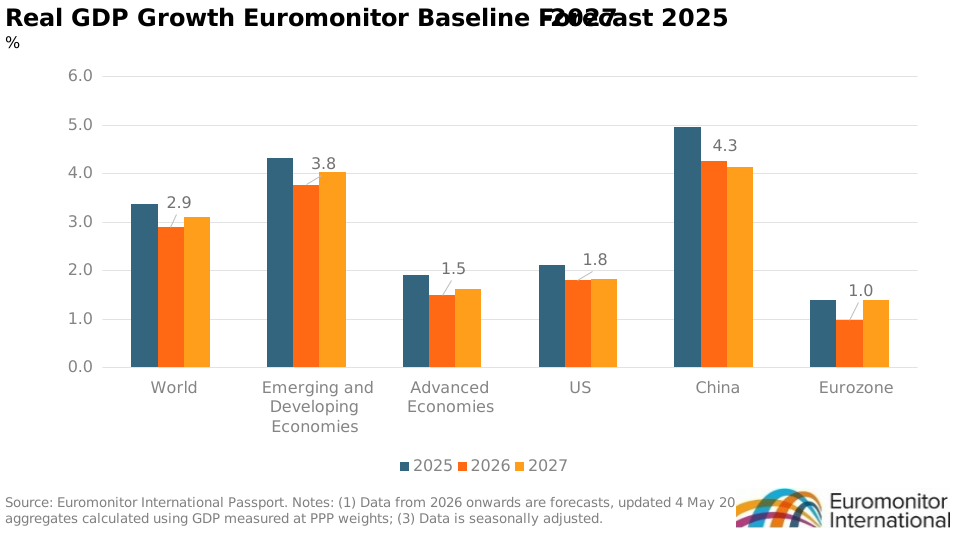
The GCC is stagnating "away" from oil it is moving beyond dependence on it. Hydrocarbons will stay central to fiscal strength and sovereign financial investment capability. Nevertheless, the tactical shift lies in transforming oil wealth into diversified economic power. By 2030, non-oil sectors are projected to contribute most of incremental GDP growth across the region.
The transformation underway is redefining both local hierarchy and worldwide capital integration.
Sweeping changes are concerning nations in the Gulf Cooperation Council (GCC). The United Arab Emirates (UAE) and the Kingdom of Saudi Arabia (KSA), long reliant on hydrocarbon exports, are charting a vibrant new course towards economic diversification. Local production and manufacturing are at the leading edge of the shift, together with growing sectors, consisting of tourist, retail, and innovation.

Latest Posts
Analyzing GCC Stock Exchange Shifts through 2026
Why Industrial Expansion Drives GCC Growth in 2026

Reviewing Industrial Growth across the GCC