All Categories
Featured
Table of Contents
All GCC countries face the difficulty of making sure future work for nationals while preserving reliance on foreign workers to fill particular roles, the seriousness of this issue differs across nationwide contexts considering that GCC nations' demographics and top priority locations diverge substantially. For countries that rely greatly on foreign labour, there is a danger that transition procedures will worsen poor working conditions and increase workers' vulnerability to exploitative practices.
Economic diversity and associated green shift strategies develop adequate opportunities but also improved obligations for business running in the GCC area. Throughout this procedure, both federal governments and businesses have a responsibility to respect and advance worker well-being and account for future labour requirements through, for example, ensuring decent working conditions and investing in filling future skills spaces.
Safeguarding Prosperity: The Long-Term Vision of Regional Wealth FundsWhereas federal governments are required to provide robust regulative structures and enforcement mechanisms in line with worldwide requirements, organizations have an obligation to regard globally acknowledged human rights and labour standards in line with the UN Guiding Principles on Business and Human Rights. Organizations can also use their utilize to guarantee that governments and partners enhance policies and responsibility systems, supplying an environment favorable to responsible business practices.
Expecting this threat and building capacity around how to fix this issue within the GCC context will be crucial to promoting responsible company in the area.
For years, hydrocarbon incomes formed the political economy of the Gulf Cooperation Council (GCC). In 2010, oil and gas accounted for more than 70% of government profits throughout a lot of GCC states. Today, that figure is gradually decreasing not because oil has ended up being unimportant, however since diversity has moved from ambition to execution, Invest-Gate reports.
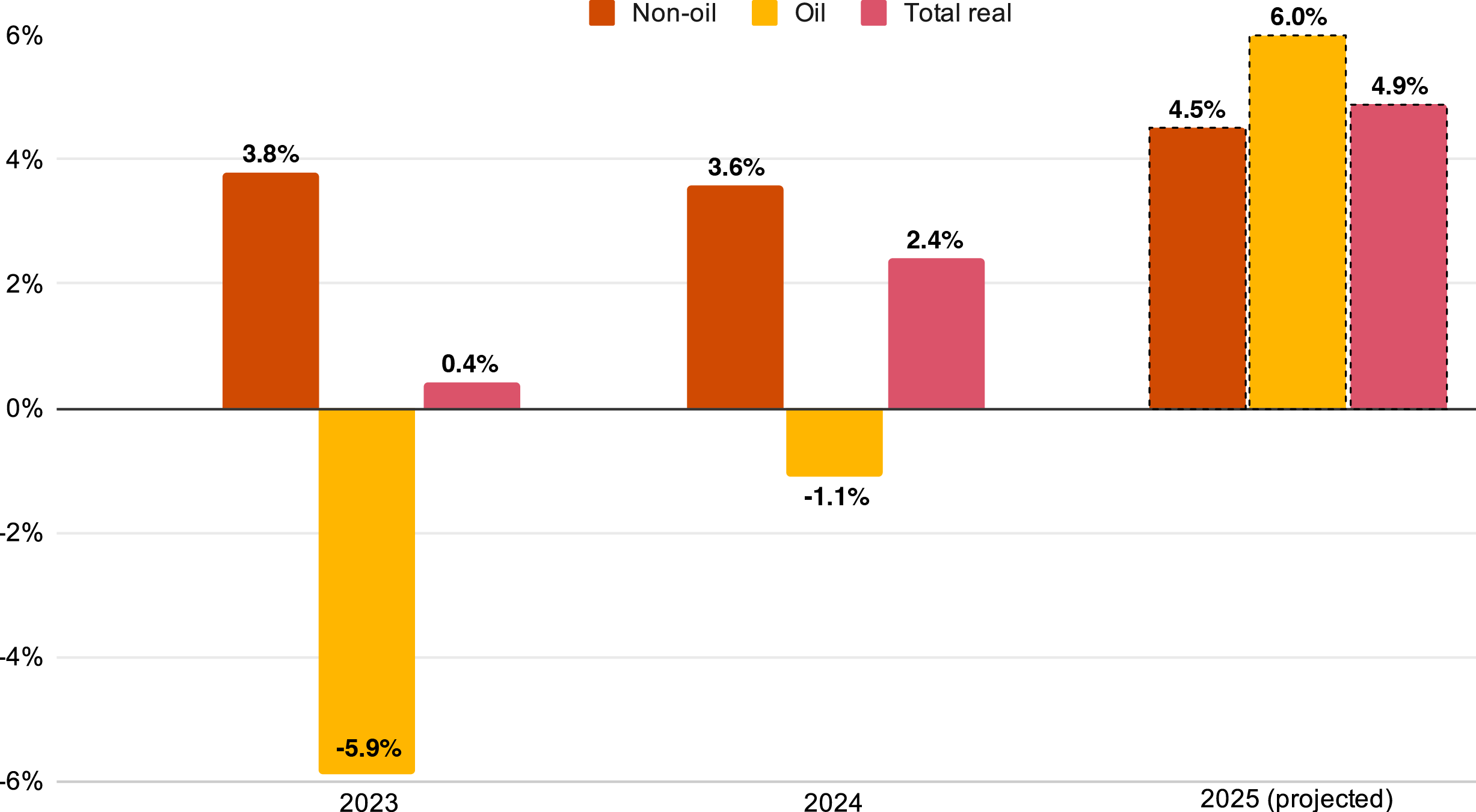
Will GCC Industrial Success Exceed Western Averages?
The UAE's non oil sector expanded by more than 6% in 2023. It is a structural change redefining financial impact and capital allotment in the area.
Oman and Bahrain have actually pursued financial combination and logistics driven diversity. These strategies operate as economic operating systems collaborating regulation, capital release, facilities advancement, and foreign investment attraction.
The UAE attracted more than $22 billion in FDI inflows in 2023, ranking among the top global recipients. QatarEnergy committed over $30 billion to LNG growth while parallel investments streamed into technology and sovereign portfolios abroad. Infrastructure, tourist, innovation, renewable energy, and logistics are now absorbing capital as soon as concentrated in upstream oil projects.
Comparing Regional Investment Incentives vs Global Markets
Diversification is not just economic it is geopolitical. Financial power is progressively determined by: Control over worldwide logistics corridors Sovereign wealth fund impact in international markets Technological ecosystems Ability to bring in global talent The UAE has placed itself as a global monetary and logistics center. Saudi Arabia is leveraging scale and domestic demand to reshape regional supply chains.
As non-oil sectors broaden, fiscal resilience improves. Break even oil rates have gradually declined in some GCC states due to varied earnings streams, consisting of VAT, business taxes, and investment earnings.
Safeguarding Prosperity: The Long-Term Vision of Regional Wealth FundsAbu Dhabi sovereign entities are broadening tactical stakes worldwide. Doha is deepening partnerships across Asia and Europe. Private equity, endeavor capital, and IPO activity have actually sped up. Saudi Arabia led the area in IPO continues in 2023-2024, while the UAE continues to control in startup funding and tech ecosystem maturity. This redistribution of financial gravity is slowly recalibrating local impact.
Advantages of Scaling Manufacturing Projects in the Middle East
The GCC is stagnating "away" from oil it is moving beyond reliance on it. Hydrocarbons will remain central to financial strength and sovereign investment capability. However, the tactical shift lies in changing oil wealth into diversified financial power. By 2030, non-oil sectors are forecasted to contribute the majority of incremental GDP growth throughout the region.
The improvement underway is redefining both regional hierarchy and international capital integration.
Sweeping modifications are coming to countries in the Gulf Cooperation Council (GCC). The United Arab Emirates (UAE) and the Kingdom of Saudi Arabia (KSA), long reliant on hydrocarbon exports, are charting a vibrant brand-new course toward financial diversification. Local production and production are at the forefront of the shift, alongside burgeoning sectors, including tourist, retail, and technology.

Latest Posts
Analyzing GCC Stock Exchange Shifts through 2026
Why Industrial Expansion Drives GCC Growth in 2026
Reviewing Industrial Growth across the GCC